Call Us Today
Call Us Today
Steve Kherkher - July 29, 2026


Millions of Americans rely on prescription and over-the-counter (OTC) medications to manage everything from general health to diabetes to treatment of diseases like cancer. Most medications are safe when used as directed, but some drugs have been linked to serious injuries that were not fully understood, or adequately disclosed, before they reached consumers.
If you have suffered a severe health complication due to a defective drug, you may be wondering whether it was simply an unfortunate side effect or something more serious. In some cases, injuries caused by dangerous or defective drugs can lead to legal claims against the companies responsible for designing, manufacturing, or marketing them.
Knowing the difference isn’t always easy. A defective drug lawyer at Kherkher Garcia can help. We can evaluate whether your injury may be connected to a dangerous medication and if you have a potential claim.
Not every medication that causes side effects is “defective.” Every OTC and prescription medication carries some level of risk. Manufacturers are required to disclose known side effects or drug interactions so that patients and physicians can make informed decisions.
A drug may be considered defective when it is unreasonably dangerous because of problems involving design, manufacturing, or failure to warn patients and healthcare providers. Generally, defective drug claims fall into three categories:
Some medications may be inherently dangerous because of the way they were designed. Even when they are manufactured correctly, a drug’s risks may outweigh the intended benefits.
Sometimes a medication is safe in theory but becomes dangerous because of contamination, improper manufacturing, or quality control failures.
Many defective drug lawsuits involve allegations that manufacturers failed to adequately warn doctors or patients about known or reasonably discoverable risks associated with a medication.
Understanding which category (or multiple) may apply requires careful review of scientific evidence, regulatory history, and medical records. This is best done with the assistance of a defective drug attorney.
While every case is unique, certain circumstances frequently appear in cases involving dangerous or defective drugs. Some of the warning signs that may indicate a potential claim include:
Timing alone doesn’t prove a drug caused your injury, but it can raise important questions. Injuries that are often present in defective drug claims include:
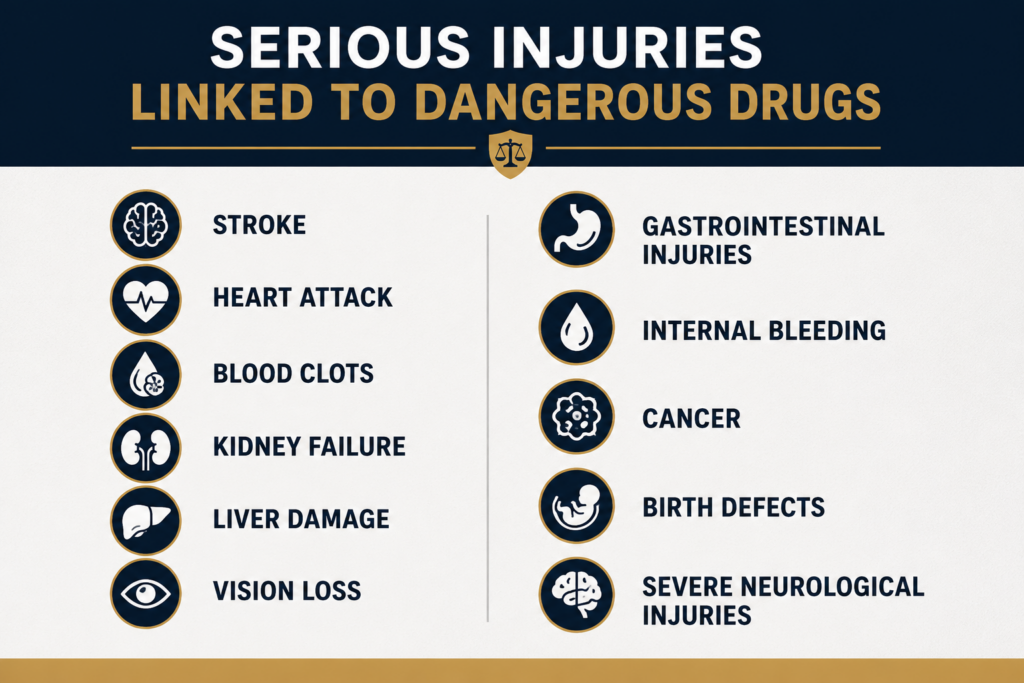
When serious medical complications develop after beginning a new medication, or after long-term use of a medication, it may be time to contact an attorney.
Many dangerous drug lawsuits emerge following safety alerts or recalls. Examples of these notices include:
A recall is not required to file a lawsuit, but it does help indicate that risks or defects became known after the medication entered the market.
Many defective drug claims become part of consolidated legal proceedings like multidistrict litigation (MDL). When numerous people report similar injuries involving the same medication, courts often consolidate cases to improve efficiency. This allows each injured person’s claim to remain separate, but simplifies some legal processes.
Examples of medications that have generated significant litigation include various diabetes drugs, birth control medications, antidepressants, blood thinners, and weight loss medications.
Patients cannot make informed medical decisions without accurate information from their healthcare team. If investigations later reveal that important safety information was unavailable or withheld, it may become the basis of failure-to-warn claims.
This does not necessarily mean your physician did anything wrong. In many cases, lawsuits focus on whether pharmaceutical manufacturers adequately informed healthcare providers about known or reasonably discoverable risks.
Drug labels often evolve as additional research information becomes available. If significant warnings were added to a drug’s label after your injury occurred, investigators may examine when the manufacturer became aware of those risks. They may also explore whether earlier warnings were appropriate.
Defective drug lawsuits typically involve significant injuries rather than temporary side effects. You may have a potential claim if your injury or illness caused more than temporary discomfort. It is important to contact a defective drug attorney if a dangerous or defective drug resulted in:
One of the biggest misconceptions is that FDA approval means a drug cannot be the subject of litigation. In reality, medications and medical products are monitored long after they enter the marketplace. As more patients use a drug and report their experiences, previously unknown risks sometimes emerge.
Manufacturers may later update warning labels, issue recalls, or face lawsuits alleging that safety information should have been communicated sooner.
FDA approval does not automatically prevent injured patients from pursuing legal claims.
Every case is different, but evidence is always one of the most important factors in any legal case. Evidence that can be helpful in proving your case includes:
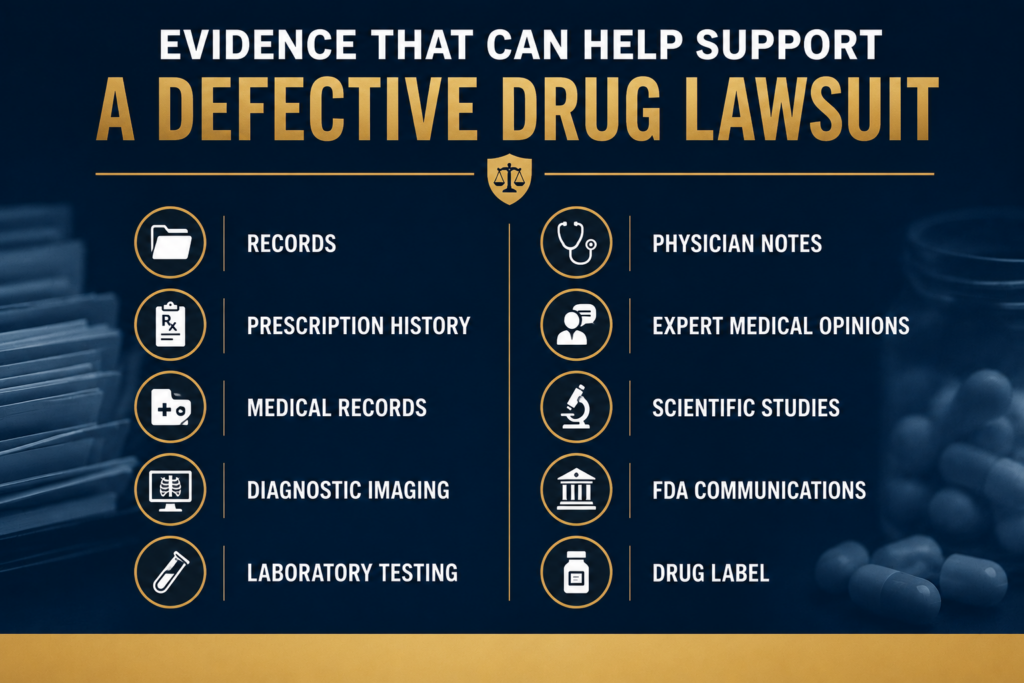
Preserving documentation can make it easier to evaluate whether a claim may exist.
Compensation and the value of a defective drug lawsuit vary depending on the injuries or illness and the scope of the case. Depending on the circumstances, compensation may be available for:
The amount recoverable depends on the facts of each individual case.
Pharmaceutical litigation is one of the most scientifically complex areas of personal injury law. These cases require extensive review of:
If you believe a medication caused a serious injury, it is generally best to speak with an attorney as soon as possible. An attorney may be able to help determine:
Having an attorney on your side to investigate your situation may help preserve important evidence and protect your legal rights.
Speaking with a defective drug lawyer is the best way to determine if you have an actionable claim. Determining if you have a claim requires a thorough review of the facts related to your injury and any applicable medications.
Yes. A recall is not required to pursue a defective drug lawsuit.
Every medication has potential side effects. A defective drug involves allegations that a medication was unreasonably dangerous or that important risks were not adequately disclosed to patients or healthcare providers.
No. FDA approval does not automatically prevent pharmaceutical litigation.
The timeline varies depending on the complexity of the case, medical evidence, and whether the claim becomes part of multidistrict litigation.
Seek appropriate medical care, continue, preserve medical and pharmacy records, and speak with an attorney to understand your legal options.
If you or someone you love suffered a serious injury after taking a medication, understanding your legal options can be challenging. The attorneys at Kherkher Garcia have experience handling complex product liability matters and can evaluate whether you may have a potential claim.
We stand beside our clients from day one, explaining the legal process, answering your questions, and helping you understand your rights and options. Contact our team today for a free drug injury consultation. Call us at 713-333-1030, or submit our website contact form to learn more.

This page has been written, edited, and reviewed by a team of legal writers following our comprehensive editorial guidelines. This page was approved by attorneys Steve Kherkher and Jesus Garcia Jr., who have more than 50 years of combined legal experience championing the rights of those who have experienced catastrophic injury due to negligence.
Connect with a Kherkher Garcia trial lawyer today to pursue maximum compensation for your injury.