Call Us Today
Call Us Today
Steve Kherkher - August 10, 2026


A recent chemical release at the Marathon refinery in El Paso is renewing concerns about the potential health effects of refinery emissions on workers and nearby residents.
According to incident reports from the Texas Commission on Environmental Quality (TCEQ), the refinery reported releasing significant quantities of sulfur dioxide, 1,3-butadiene, and propylene during process disruptions last week. Residents in neighborhoods near the refinery reported strong odors and symptoms including nausea, headache, and throat irritation.
For workers and residents who are exposed to chemicals during an industrial release, the incident raises an important question: What happens when symptoms don’t end when the smell disappears?
At Kherkher Garcia, our chemical injury attorneys represent workers and residents affected by chemical exposure, including those related to oil and gas industries. If you believe you were exposed to hazardous chemicals and have symptoms, we can help investigate what happened and whether you may have legal options.
According to TCEQ incident reports, two separate emissions events occurred at the Marathon refinery after a Fluid Catalytic Cracker (FCC) experienced a process upset and shut down. During the first event, approximately 862 pounds of sulfur dioxide were estimated to have been released over a 24-hour period.
A second event reportedly occurred over approximately two hours. The report estimated releases of approximately 19 pounds of 1,3-butadiene and 8,897.9 pounds of propylene, or roughly 4 tons of propylene.
TCEQ cautioned that the numbers in the initial notification are estimates. The agency stated that those figures may change once the company completes its evaluation. TCEQ will then investigate the events to determine compliance with applicable rules, permits, notification requirements, and reporting obligations. The El Paso Local Air Program is also investigating the incidents.
The El Paso chemical release occurred alongside complaints from people living near the refinery. According to local reports, residents in El Paso near the refinery described strong odors after the release. Some reported headaches, nausea, throat pain, and difficulty breathing. Some residents left the area out of concern for their health.
El Paso County Commissioner David Stout said complaints extended into neighborhoods including Five Points and Manhattan Heights, which are three and four miles away, respectively.
Marathon said trained personnel responded to the incident, identified the source, and addressed the situation. The company also said they were monitoring air quality as a precaution and did not detect readings that would suggest a health risk.
Those statements and the reported symptoms from those nearby illustrate an important distinction: the absence of a detected health risk at a particular time or location does not, by itself, determine an individual’s exposure or medical condition. Determining whether someone was exposed to a chemical and has an injury requires medical, environmental, and technical evidence.
Sulfur dioxide, or SO₂, is a gas associated with industrial processes and fossil-fuel combustion. The U.S. Environmental Protection Agency (EPA) states that even short-term exposure to sulfur dioxide can affect the respiratory system and cause difficulty breathing. People with asthma can be particularly sensitive to these effects. Possible respiratory effects are one reason sulfur dioxide releases can be particularly concerning near populated areas.
The details of the El Paso refinery chemical release are still under investigation. However, the known health effects of the sulfur dioxide underscore why symptoms warrant appropriate medical evaluation.
1,3-butadiene is a colorless gas used in the production of synthetic rubber, plastics, and other similar materials. According to the Agency for Toxic Substances and Disease Registry (ATSDR), acute exposure to high concentrations can cause symptoms including irritation of the eyes, nose, throat, and skin. Higher exposures can cause symptoms including headache, nausea, fatigue, dizziness, and central nervous system depression.
The agency also notes that studies suggest workers exposed to 1,3-butadiene have an increased risk of cancers of the blood and lymphatic system. That distinction is important when discussing chemical exposure claims. Some potential health consequences are immediate, while others may involve longer-term medical monitoring and evaluation.
Propylene, also called propene, is a colorless gas used in many industrial processes. High concentrations can cause symptoms such as dizziness, drowsiness, and even loss of consciousness. The substance is also highly flammable.
The reported release of approximately 4 tons of propylene is therefore significant enough to warrant attention. The total amount actually released, and the circumstances thereof, remain subject to regulatory review.
One of the challenges in chemical exposure cases is that symptoms can vary significantly depending on the substance, concentration, duration of exposure, route of exposure, and individual circumstances. That’s why a careful medical evaluation and review is crucial.
Potential symptoms following an industrial chemical exposure can include:
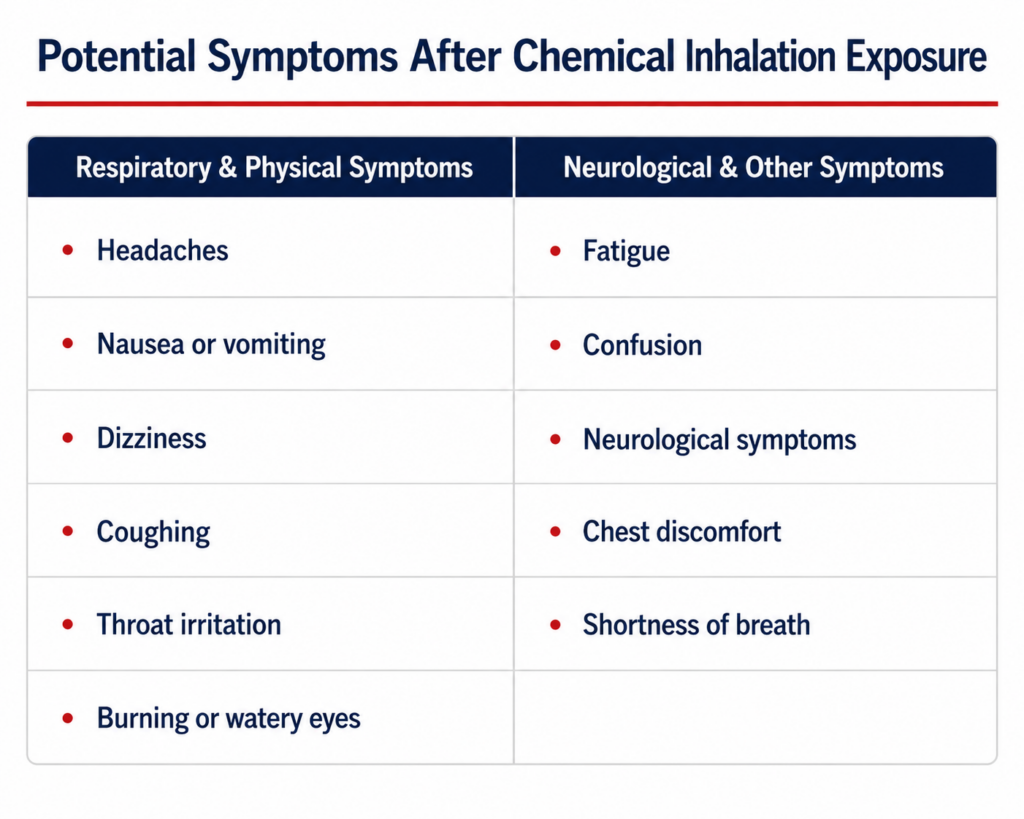
Some exposures can also raise concerns about longer-term health consequences. For that reason, people who believe they were exposed should document what happened and seek appropriate medical attention rather than assuming symptoms will simply disappear.
Industrial chemical exposure claims can involve evidence that is complicated, technical, and sometimes difficult for an individual to obtain. An investigation may involve multiple parties, a plethora of documentation, and complex legal nuances. The timing of exposure and symptoms can also impact potential claims.
If someone develops symptoms after a chemical release, it is important to document the following:
These facts all may help establish a timeline for later investigation.
A refinery employee and a nearby resident can experience the same chemical release under very different circumstances. Workers may be closer to the source of exposure, but may also have access to personal protective equipment. They may also have access to occupational exposure records, employer safety documentation, training materials, and workplace monitoring.
Nearby residents may be exposed over a period of time in lesser quantities, depending on wind, location, and other factors. They must rely on environmental monitoring, public records, medical documentation, and local reports to determine their level of risk.
The legal issues can also differ depending on how the exposure occurred, who may have contributed to it, and what evidence exists. These are all reasons why chemical exposure cases should be evaluated individually.
The El Paso Marathon incident also comes amid broader scrutiny of the refinery’s environmental permit. Local officials have called for greater transparency and additional monitoring, including neighborhood and fence-line monitoring.
The Texas Commission on Environmental Quality recently voted to review the refinery’s air permit rather than automatically renew it. That process could require Marathon to provide additional information about its chemical releases and how their guidelines and releases are calculated.
A public hearing is likely to be set as part of that process, with an opportunity for affected members of the community to participate.
If you were working at or living near a refinery during a chemical release and believe you may be affected, consider taking practical steps to document what happened.
Some chemicals can cause immediate and longer-term health concerns, depending on the substance. Some injuries take months or even years for symptoms to develop.
Symptoms of chemical exposure may include headaches, nausea, dizziness, coughing, throat irritation, breathing difficulties, eye irritation, and neurological symptoms.
Potentially. The legal options available depend on the circumstances of the exposure, employment relationship, and what parties may be legally responsible.
Potentially. Residents may have legal options depending on the facts, resulting injuries, and any applicable legal requirements.
No. A regulatory finding and a personal injury claim involve different legal questions.
Kherkher Garcia represents workers and residents who have suffered injuries from chemical releases, refinery incidents, and industrial accidents. Our attorneys can help investigate the circumstances surrounding chemical exposure and determine if you have an actionable claim. We have helped victims of incidents involving major companies like Marathon, Valero, BP, and Exxon.
You do not have to know exactly which chemical caused your symptoms before reaching out for help. If you believe you were exposed and are experiencing health problems, an attorney can help you understand what information may be important to protecting your legal rights.
If you believe you were exposed to chemicals during the El Paso refinery chemical release and are experiencing symptoms or other health concerns, Kherkher Garcia can help you understand your rights and options. Contact our team for a free injury consultation to discuss what happened and learn what steps may be available to protect your rights.
You can start now by calling 713-333-1030, or by submitting our website contact form.

This page has been written, edited, and reviewed by a team of legal writers following our comprehensive editorial guidelines. This page was approved by attorneys Steve Kherkher and Jesus Garcia Jr., who have more than 50 years of combined legal experience championing the rights of those who have experienced catastrophic injury due to negligence.
Connect with a Kherkher Garcia trial lawyer today to pursue maximum compensation for your injury.