Call Us Today
Call Us Today
Steve Kherkher - September 18, 2026


A year after a deadly coke works explosion at a Pennsylvania steel facility, the U.S. Chemical Safety and Hazard Investigation Board (CSB) has released its final report detailing what investigators found contributed to the incident.
The August 11, 2025 explosion at U.S. Steel’s Clairton Coke Works in Clairton, Pennsylvania, involved the release and ignition of toxic, flammable coke oven gas. Two workers were killed and 11 others were injured, including five who suffered serious injuries. The CSB estimates that the explosion caused approximately $52.5 million in property damage.
The CSB identified three key safety issues connected to the incident and its severity: procedures and hazard analysis, facility siting, and process safety management systems. The agency also issued recommendations to U.S. Steel, Nippon Steel North America, and MPW Industrial Services.
For workers in Texas and across the country, the report provides an important reminder of the risks that can arise when industrial facilities handle flammable or toxic materials and when safety procedures, equipment, and facility design do not adequately address those hazards. Below, the work injury attorneys at Kherkher Garcia provide insight into the report and how it could impact Texas workers.
U.S. Steel’s Clairton Coke Works is a large coke manufacturing facility that dates back to 1901. The facility currently operates six coke batteries containing a total of 455 ovens. Coke production involves heating metallurgical coal to approximately 2,000 degrees Fahrenheit. The process produces coke oven gas, which contains hydrogen, methane, nitrogen, and carbon monoxide. According to the CSB, coke oven gas is highly flammable and toxic.
The August 2025 incident occurred during maintenance involving an isolation valve serving Battery 13. The CSB found that U.S. Steel had a procedure for exercising the valve to confirm it could operate through its full range. Workers had experienced difficulty fully closing some valves because residue accumulates in the valve seat.
According to the final report, workers would use pressurized water to clean valve seats when valves would not fully close. However, the valve-exercising procedure in place at the time did not address using water. Also, the company did not have a formal procedure specifically for using pressurized water for that task. The CSB found that employees had nevertheless used pressurized water on valves on an ad hoc basis for at least three years.
On the day of the explosion, a supervisor arranged for contractors from MPW Industrial Services to use a pump truck to apply pressurized water to the valve. The CSB investigation found that the valve’s double gates were closed or almost closed while water was being applied. This created an enclosed space between the gates. This further allowed pressure to increase inside the valve until it failed, releasing toxic and flammable coke oven gas. The released gas ignited within minutes, causing the explosion.
The CSB also identified concerns involving the valve itself. The failed valve was made of cast iron and was manufactured in 1953. It was refurbished in 2013. The agency noted that cast iron is a brittle material. Safety publications advise caution or prohibit the use of cast iron equipment in certain hazardous applications. This includes applications involving flammable substances such as coke oven gas.
Aging equipment does not automatically mean that an accident was caused by age itself. Industrial facilities routinely operate, maintain, inspect, repair, and replace equipment over long periods. But the Clairton investigation illustrates why the condition and intended use of industrial equipment can become important questions after a serious workplace accident.
For workers injured in an industrial explosion, those questions may become part of understanding what happened and what evidence should be preserved. Kherkher Garcia Partner, Kevin Haynes, discusses aging infrastructure in a recent article in The Texas Lawbook.
The CSB’s findings did not focus solely on the valve and maintenance operation. Investigators also examined facility siting, observing where occupied buildings were located in relation to hazardous processes.
The explosion occurred in an area between Coke Batteries 13 and 14 where several buildings were routinely occupied by workers. The CSB found that some of those buildings were less than 20 feet above the coke oven gas piping involved in the incident. According to the agency, the buildings were not designed or constructed to withstand an explosion. Two workers who were fatally injured were in or near separate control rooms. Two seriously injured workers were in a break room in the area. The CSB recommended that U.S. Steel conduct a siting evaluation for occupied and potentially occupied buildings at the facility and address hazards identified through that evaluation.
The finding highlights an important principle in industrial safety: preventing a hazardous release is only part of protecting workers. The location of occupied areas can also affect the consequences if a fire, explosion, or toxic release occurs.
The CSB identified process safety management systems as one of the three key safety issues associated with the incident. Process safety management is particularly important in facilities where workers handle hazardous chemicals, flammable gases, and other potentially catastrophic hazards. A safety system may involve much more than providing personal protective equipment (PPE) or reminding workers to follow safety rules. It can also include:
The Clairton investigation demonstrates why those systems matter at multiple levels. The agency recommended that U.S. Steel develop a written procedure for washing valve seats with pressurized water. The recommendation included establishing appropriate controls to minimize the risk of overpressure, and conducting a hazard analysis or safety validation of that procedure.
The CSB’s role is to investigate major chemical incidents and identify their causes and safety recommendations. It is not a regulatory enforcement agency and does not determine civil liability or compensation for individual workers. For injured workers and families, however, an investigation by an agency such as the CSB can provide important information about how a catastrophic incident occurred.
For workers who suffer serious injuries, the consequences can extend well beyond the initial emergency treatment. Explosions can cause burns, fractures, traumatic brain injuries, spinal injuries, respiratory injuries, hearing damage, crush injuries, and psychological trauma. Some workers may also face extended rehabilitation, permanent limitations, or an inability to return to their previous occupations.
The Clairton investigation demonstrates the importance of examining the history surrounding an industrial operation, along with the physical location and other factors. Understanding the full scope of an incident requires more than the moments immediately preceding an explosion. For injured workers and families, obtaining and preserving relevant evidence can be an important part of understanding what happened.
If you or a loved one has suffered serious injuries in an industrial accident, you may have questions about your rights. You may hear terms like “workers’ compensation”, “non-subscriber claims”, or “third party claims”. The legal options available to you depend on the circumstances of the accident, the employer’s insurance status, the parties involved, and the evidence available.
Kherkher Garcia represents injured workers and families in serious workplace and industrial accident matters. Our team carefully investigates the circumstances surrounding an accident, helps identify potentially responsible parties, and explains the legal options that may be available.
If you or someone you love has been seriously injured in a workplace explosion, industrial accident, or chemical incident, Kherkher Garcia is available for a free, confidential consultation.
A serious workplace accident can leave workers and families facing painful injuries, mounting expenses, and uncertainty about what comes next. If you or a loved one has been injured in an explosion or other industrial accident, Kherkher Garcia can help you understand your legal options and the next steps that may be available.
Call 713-333-1030 for a free work injury consultation. You can also request more information or schedule a consultation by submitting our online contact form.
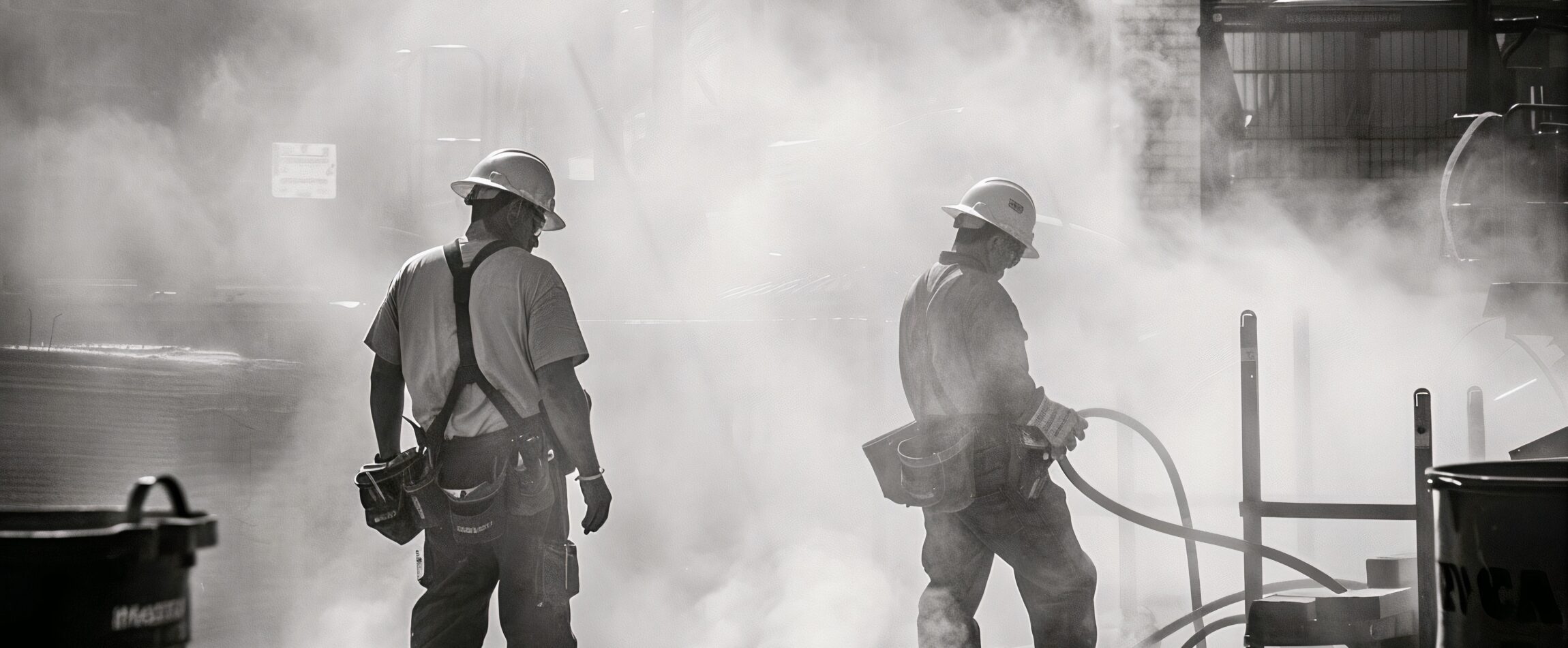
Image by fanjianhua on Magnific
Steve Kherkher is passionate about serving his clients. He has dedicated his life to championing the rights of those who have experienced catastrophic injury due to negligence.
Steve Kherkher, along with Trial Lawyer Jesus Garcia, founded Kherkher Garcia, and under their leadership, the firm achieved unprecedented success within its first three years.
With a career spanning over 35 years, Steve’s tireless pursuit of justice for his clients has earned him national recognition and numerous accolades as an exemplary trial attorney.

This page has been written, edited, and reviewed by a team of legal writers following our comprehensive editorial guidelines. This page was approved by attorneys Steve Kherkher and Jesus Garcia Jr., who have more than 50 years of combined legal experience championing the rights of those who have experienced catastrophic injury due to negligence.
Connect with a Kherkher Garcia trial lawyer today to pursue maximum compensation for your injury.