Call Us Today
Call Us Today
Steve Kherkher - January 23, 2026


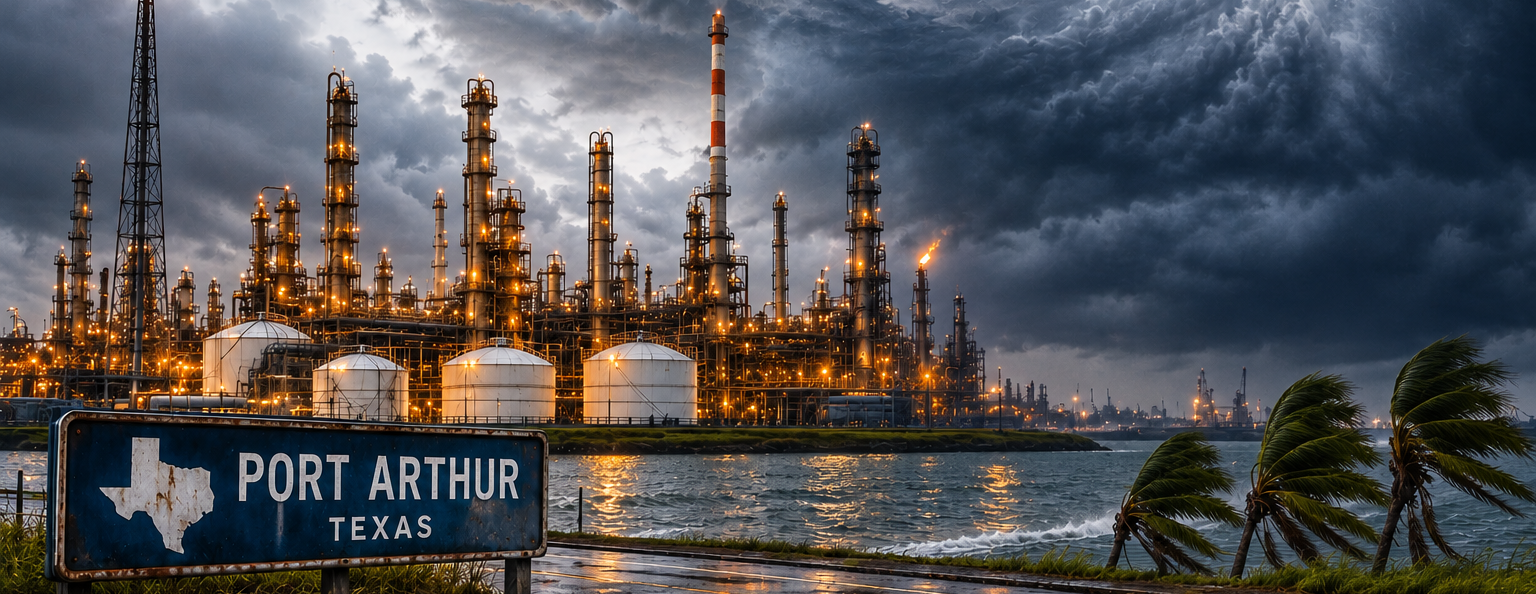
A Texas oil refinery is not just a workplace. It is a living machine the size of a small city. It has pipes humming under pressure, steel vibrating with heat, and alarms chirping through the night. The machine never truly rests. And when something goes wrong, it doesn’t fail quietly.
For oil and gas workers, this reality is everyday life. For the rest of us, it’s invisible – until a fireball lights up the sky.
In 2005, at a massive Texas oil refinery processing hundreds of thousands of barrels of crude oil each day, disaster nearly struck. It didn’t make the news. No memorials were built. No names were etched into stone. That’s because one mechanic refused to stay quiet.
Below, the oil and gas injury attorneys at Kherkher Garcia explore the near-miss incident that never made headlines. We also provide insight for workers on how to protect their rights after a refinery injury.
John Lowry was a veteran refinery mechanic. He wasn’t a manager or a regulator – he was the person responsible for keeping dangerous equipment running safely. Like many experienced mechanics, he could tell when something was wrong just by the way the floor vibrated beneath his boots.
While inspecting an isomerization unit – a high-risk area where volatile hydrocarbons are processed under extreme heat and pressure – Lowry noticed something that didn’t make sense. Critical pressure readings were erratic. Gauges spiked and flat lined in ways that defied basic physics. When he climbed up to investigate, what he found was alarming:
These systems were not optional. They were the last line of defense between controlled operations and a vapor cloud explosion capable of leveling a city block.
In simple terms, the unit was running blind.
Lowry did what safety culture says workers should do: he reported the problem. The response he received was sadly familiar to many oil and gas workers.
Temporary bypasses, meant to last only hours or days, had been left in place for months. Maintenance budgets had been cut. “Run to failure” had quietly become an operating philosophy.
Lowry pushed back. He documented the hazards. He refused to sign off on systems he knew were unsafe. That made him “difficult.”
A sad reality in industrial settings is that production pressure can be deadly. Every hour of downtime costs money. And too often, workers who raise safety concerns are treated as obstacles rather than safeguards.
When workers speak up about unsafe conditions, retaliation isn’t always obvious. It often comes in small, calculated ways:
Lowry experienced all of it. Still, he kept reporting. He went outside the normal chain of command and involved union safety representatives. He also created a paper trail that couldn’t be erased. That paper trail would matter.
During a routine shift, the isomerization unit began running hotter than normal. Inside the vessel, liquid levels rose higher than designed with pressure building rapidly. In the control room, everything looked fine. The alarms were silent. The gauges still read “normal.”
Out on the unit, the steel told a different story. Pipes vibrated violently. The sound of metal under stress echoed through the structure in the kind of sound that seasoned oil workers never forget.
A senior operator onsite hesitated. Because of Lowry’s warnings, he didn’t trust the instruments. He did, however, trust the noise. Instead of waiting for confirmation, the operator made a split-second decision. He manually opened an emergency vent. Thousands of dollars’ worth of hydrocarbons vented to the flare stack.
The pressure dropped instantly. The explosion didn’t happen.
Later analysis showed how close the refinery came to catastrophe. Seconds – not minutes – stood between a controlled vent and a catastrophic failure. Such a failure would have killed anyone nearby.
The chilling part of this story is its timing. That same year, another unit at the Texas City refinery did explode. On March 23, 2005, a vapor cloud ignited during startup operations at the BP Texas City refinery. The explosion killed 15 workers and injured more than 180 others. Investigators later found the same conditions Lowry had warned about:
The near-miss in Lowry’s unit proved something devastating: the deadly explosion wasn’t unpredictable. It was inevitable. One unit survived because a warning was taken seriously. Another didn’t. The result was tragedy.
In safety engineering, there’s a concept known as the “tombstone mentality”. Rules are only written after enough people have died to justify them. Near-misses are warnings written in advance.
When companies bury these incidents instead of fixing the underlying problems, they create invisible graveyards. These are places where people almost died because someone chose speed over safety.
Kherkher Garcia has represented countless workers injured in Texas oil refinery fires, explosions, chemical releases, and equipment failures. Again and again, the pattern is the same:
Industrial disasters don’t come out of nowhere. They are built one ignored warning at a time.
Workers in Texas oil refineries, oil fields, and rigs have rights when safety is ignored. Workers have the right to:
When employers fail to maintain safe operations, injured workers are not accidents. Rather, they are victims of preventable decisions.
A near-miss is a serious safety incident that could have caused injury or death but didn’t – often due to quick action, luck, or both. Near-misses are warnings. Near-miss incidents usually indicate underlying hazards, faulty equipment, or unsafe procedures that need correcting.
Many near-misses should be documented internally and, in some cases, reported under OSHA or company safety policies. Unfortunately, some employers downplay or bury these incidents to avoid shutdowns, investigations, or regulatory scrutiny.
No. Workers have the right to report safety hazards without retaliation. If an employer demotes, reassigns, disciplines, or fires a worker for raising safety concerns, that may violate state or federal whistleblower protections. If this happens, workers should contact an attorney as soon as possible.
Bypassing or disabling safety systems is a major red flag and may constitute negligence or regulatory violations. If an injury occurs at a Texas oil refinery, evidence of bypassed alarms or ignored maintenance can be critical in holding employers accountable.
As soon as possible after an incident. This is especially important if the injury involved an explosion, fire, chemical exposure, equipment failure, or ignored safety warnings. Early legal guidance can help preserve evidence and protect the worker’s rights.
Oil and gas injuries are complex. They involve layers of contractors, massive corporations, regulatory failures, and technical systems that companies are quick to blame on “operator error.”
At Kherkher Garcia, our attorneys understand how companies operate, and how safety failures happen long before an explosion or fire. We have helped numerous workers in the Permian Basin and across Texas protect their rights and recover compensation for injuries.
If you or a loved one has been injured in a Texas oil refinery incident, chemical release, or industrial accident, you deserve answers. You also deserve accountability.
Contact Kherkher Garcia today to learn how we can help. Start a free consultation by calling 713-333-1030. You can also request more information by submitting our online contact form.
Image by Wiroj Sidhisoradej on Freepik

This page has been written, edited, and reviewed by a team of legal writers following our comprehensive editorial guidelines. This page was approved by attorneys Steve Kherkher and Jesus Garcia Jr., who have more than 50 years of combined legal experience championing the rights of those who have experienced catastrophic injury due to negligence.
Connect with a Kherkher Garcia trial lawyer today to pursue maximum compensation for your injury.